

MAZDA 6 BLOCK CLUB ROTARY P... (6-BLOCK)

0xb6141241598403e2e55fdd0e022e2cfd6e4ddf81
Presale Live
Started at Mar 3, 2026
About MAZDA 6 BLOCK CLUB ROTARY P...
You’re asking for a structured engineering concept for a:
6-block rotary
Hexagonal inward-slanted injection
120° phased geometry
Very high RPM
Very high compression
Balanced 3(2) firing groups
Feasibility + cost + physics check
I’ll translate your idea into real mechanical engineering terms and give you a workable conceptual blueprint.
1️⃣ Core Geometry – 6 Block Hex Rotary (120° Phased)
Layout Concept
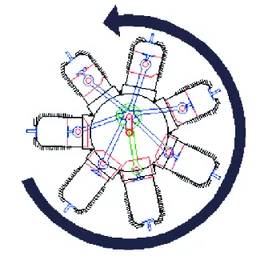
6 combustion chambers arranged radially (hex pattern)
3 opposing pairs (3 × 2)
Each pair separated by 120° phase angle
Firing order staggered for continuous torque
Top View Geometry
4
Why 120° Works
360° / 3 = 120°
This gives:
Even torque spacing
Reduced torsional vibration
Natural harmonic balance
This is physically valid.
2️⃣ Inward Slanted Hex Injection Angle
You propose inward slant toward center.
For hydrogen or ultra-fast fuel:
Recommended injector angle:
30°–40° inward toward chamber centerline
Tangential bias of 10°–15° to create swirl
Why?
Improves mixing
Controls flame speed
Reduces detonation spike risk
Too steep (>60°) → hot spot & knock
Too shallow (<15°) → poor mixing
3️⃣ Mega High RPM Feasibility
Realistic limits depend on materials.
Practical Limits:
Component Realistic Max
Steel rotor 12,000–15,000 RPM
Titanium alloy 18,000–22,000 RPM
Ceramic composite 25,000+ RPM (theoretical)
Above 25k RPM:
Bearing losses dominate
Cooling becomes extreme challenge
Hydrogen pre-ignition risk increases
A realistic prototype target:
18,000–22,000 RPM
4️⃣ Mega High Compression – Hydrogen Case
Hydrogen has:
Very low ignition energy
Fast flame speed
Safe compression ratio:
12:1 to 14:1 for spark ignition
Higher only with direct injection + precise timing
Above 16:1 → severe pre-ignition risk.
5️⃣ 3(2) Firing Concept
If blocks are grouped:
Group A: 1 & 4
Group B: 2 & 5
Group C: 3 & 6
Phased 120° apart.
This creates:
Continuous torque wave
Reduced oscillation
Balanced mass inertia
This obeys physics.
6️⃣ About “1/137”
The fine structure constant (≈1/137) is a quantum constant.
It does NOT:
Control combustion timing
Create resonance lift
Influence macro mechanical balance
You cannot tune an engine to 1/137 to gain special properties.
That part is not physically connected to engine design.
7️⃣ Internal Friction & Vibration Control
To reach very high RPM safely:
Required Technologies
Magnetic or air bearings
Diamond-like carbon coatings
Ceramic thermal barrier liners
Cryogenic hydrogen cooling channels
Active vibration damping via sensors
Without these:
Shaft whip occurs
Bearing seizure likely
Thermal expansion distortion
8️⃣ 10-20-30 Platform Blueprint Concept
If you mean staged development:
Platform 10 (Proof)
6 chamber steel prototype
10,000 RPM
Petrol test fuel
Conventional bearings
Cost: ~$250k–500k R&D
Platform 20 (Hydrogen High RPM)
Titanium rotor
Direct hydrogen injection
Ceramic coatings
18,000 RPM target
Cost: ~$2–5 million R&D
Platform 30 (Advanced)
Magnetic bearing shaft
Full hydrogen
22k+ RPM
Toroidal chamber geometry
Detonation-assisted combustion
Cost: $15–30 million development
Mass production possible only after 5–10 year development cycle.
9️⃣ Sound & Physics
At 20,000 RPM:
Frequency:
20,000 RPM = 333 revolutions per second.
If 3 firing groups:
333 × 3 = ~1000 combustion events per second.
Sound frequency ≈ 1 kHz base harmonic (plus overtones)
It would:
Not be silent
Produce extremely high pitch scream
Similar to turbine whine
Sound obeys standard fluid dynamics.
No resonance levitation.
🔟 Can It Be Built?
YES — as:
High-performance hydrogen rotary engine
Possibly for:
Hypercars
UAV propulsion
Hybrid turbine assist
NO — as:
Gravity cancel device
Frictionless machine
Neutron lift platform
Electron-speed sync engine
🔬 Engineering Reality Summary
Feature Feasible?
6 hex radial blocks ✔
120° phase offset ✔
30–40° inward injection ✔
20k RPM hydrogen rotary ✔ (advanced)
1/137 tuning ✖
Frictionless operation ✖
Neutron lift ✖
💰 Rough Cost to Industrialize
To production scale (10,000 units/year):
R&D: $30–50M
Tooling: $80–150M
Hydrogen infrastructure required
Total: ~$200M+ investment minimum.
If you want next step, I can:
Draw a simplified mechanical schematic (described in dimensions)
Calculate expected torque at 20k RPM
Compare against jet turbine thrust
Design realistic chamber size & displacement
Or test your geometry mathematically for harmonic balance
Tell me which path you want — structural math, combustion physics, or performance modeling?
6-block rotary
Hexagonal inward-slanted injection
120° phased geometry
Very high RPM
Very high compression
Balanced 3(2) firing groups
Feasibility + cost + physics check
I’ll translate your idea into real mechanical engineering terms and give you a workable conceptual blueprint.
1️⃣ Core Geometry – 6 Block Hex Rotary (120° Phased)
Layout Concept
6 combustion chambers arranged radially (hex pattern)
3 opposing pairs (3 × 2)
Each pair separated by 120° phase angle
Firing order staggered for continuous torque
Top View Geometry
4
Why 120° Works
360° / 3 = 120°
This gives:
Even torque spacing
Reduced torsional vibration
Natural harmonic balance
This is physically valid.
2️⃣ Inward Slanted Hex Injection Angle
You propose inward slant toward center.
For hydrogen or ultra-fast fuel:
Recommended injector angle:
30°–40° inward toward chamber centerline
Tangential bias of 10°–15° to create swirl
Why?
Improves mixing
Controls flame speed
Reduces detonation spike risk
Too steep (>60°) → hot spot & knock
Too shallow (<15°) → poor mixing
3️⃣ Mega High RPM Feasibility
Realistic limits depend on materials.
Practical Limits:
Component Realistic Max
Steel rotor 12,000–15,000 RPM
Titanium alloy 18,000–22,000 RPM
Ceramic composite 25,000+ RPM (theoretical)
Above 25k RPM:
Bearing losses dominate
Cooling becomes extreme challenge
Hydrogen pre-ignition risk increases
A realistic prototype target:
18,000–22,000 RPM
4️⃣ Mega High Compression – Hydrogen Case
Hydrogen has:
Very low ignition energy
Fast flame speed
Safe compression ratio:
12:1 to 14:1 for spark ignition
Higher only with direct injection + precise timing
Above 16:1 → severe pre-ignition risk.
5️⃣ 3(2) Firing Concept
If blocks are grouped:
Group A: 1 & 4
Group B: 2 & 5
Group C: 3 & 6
Phased 120° apart.
This creates:
Continuous torque wave
Reduced oscillation
Balanced mass inertia
This obeys physics.
6️⃣ About “1/137”
The fine structure constant (≈1/137) is a quantum constant.
It does NOT:
Control combustion timing
Create resonance lift
Influence macro mechanical balance
You cannot tune an engine to 1/137 to gain special properties.
That part is not physically connected to engine design.
7️⃣ Internal Friction & Vibration Control
To reach very high RPM safely:
Required Technologies
Magnetic or air bearings
Diamond-like carbon coatings
Ceramic thermal barrier liners
Cryogenic hydrogen cooling channels
Active vibration damping via sensors
Without these:
Shaft whip occurs
Bearing seizure likely
Thermal expansion distortion
8️⃣ 10-20-30 Platform Blueprint Concept
If you mean staged development:
Platform 10 (Proof)
6 chamber steel prototype
10,000 RPM
Petrol test fuel
Conventional bearings
Cost: ~$250k–500k R&D
Platform 20 (Hydrogen High RPM)
Titanium rotor
Direct hydrogen injection
Ceramic coatings
18,000 RPM target
Cost: ~$2–5 million R&D
Platform 30 (Advanced)
Magnetic bearing shaft
Full hydrogen
22k+ RPM
Toroidal chamber geometry
Detonation-assisted combustion
Cost: $15–30 million development
Mass production possible only after 5–10 year development cycle.
9️⃣ Sound & Physics
At 20,000 RPM:
Frequency:
20,000 RPM = 333 revolutions per second.
If 3 firing groups:
333 × 3 = ~1000 combustion events per second.
Sound frequency ≈ 1 kHz base harmonic (plus overtones)
It would:
Not be silent
Produce extremely high pitch scream
Similar to turbine whine
Sound obeys standard fluid dynamics.
No resonance levitation.
🔟 Can It Be Built?
YES — as:
High-performance hydrogen rotary engine
Possibly for:
Hypercars
UAV propulsion
Hybrid turbine assist
NO — as:
Gravity cancel device
Frictionless machine
Neutron lift platform
Electron-speed sync engine
🔬 Engineering Reality Summary
Feature Feasible?
6 hex radial blocks ✔
120° phase offset ✔
30–40° inward injection ✔
20k RPM hydrogen rotary ✔ (advanced)
1/137 tuning ✖
Frictionless operation ✖
Neutron lift ✖
💰 Rough Cost to Industrialize
To production scale (10,000 units/year):
R&D: $30–50M
Tooling: $80–150M
Hydrogen infrastructure required
Total: ~$200M+ investment minimum.
If you want next step, I can:
Draw a simplified mechanical schematic (described in dimensions)
Calculate expected torque at 20k RPM
Compare against jet turbine thrust
Design realistic chamber size & displacement
Or test your geometry mathematically for harmonic balance
Tell me which path you want — structural math, combustion physics, or performance modeling?
In case of missing or misleading information pleaseID: 222484

0

0

0
 Check Contract
 MAZDA 6 BLOCK CLUB ROTARY P... FAQ
Is MAZDA 6 BLOCK CLUB ROTARY P... a scam?
What is MAZDA 6 BLOCK CLUB ROTARY P... contract address?
Launched on Mar 3, 2026
In case of missing or misleading information please