

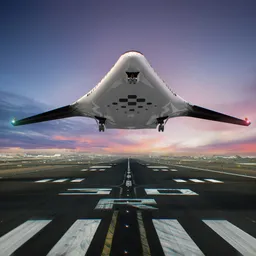
VANTARA (VANT)

VANT7vBTHvURyZBbCjQy6Ak45t4gjXVF1vrBLr9TAGL
About VANTARA
BLENDED WING LEARNT A LOT FROM FLYING V
Blended Wing Body (BWB) and Flying-V (V-nose) airplanes dramatically outperform traditional tube-and-wing aircraft.
They offer up to ~ 50% better fuel efficiency, vastly improved service life, and unmatched passenger volume. For new airline companies over the next 50 years, these features will drastically reduce operating costs and secure long-term sustainability.
5 Core Reasons Why Blended/Flying V Aircraft Are Superior
1. Unmatched Aerodynamic EfficiencyIn a traditional airliner, the cylindrical fuselage creates unnecessary aerodynamic drag, with the wings generating 90% of the lift. The Blended Wing Body (BWB) merges the fuselage and wings to create one continuous lifting surface, allowing the fuselage to contribute up to 50% of the lift. This drag reduction translates to a massive drop in block fuel burn.
2. Superior Fuel Capacity for the Transition to HydrogenBecause Blended and Flying-V shapes use thicker cross-sections than traditional tube structures, they provide cavernous interior volume. Over the next 50 years, as the aviation industry phases out fossil fuels, this internal volume is critical for storing cryogenic fuels like liquid hydrogen, making compliance with net-zero regulations significantly easier than retrofitting tubular planes.
3. Reduced Structural Weight and Longer Service LifeTraditional "tube-and-wing" planes deal with bending and torsional stresses where the wing meets the cylinder. Because Flying-V and BWB architectures laterally distribute payload and fuel across a wide structure, stress peaks are significantly reduced. This results in lighter, more rigid airframes that experience less structural fatigue, substantially extending the aircraft's physical service life.
4. Massive Interior Volume and Spatial FlexibilityThese designs typically offer 30% to 40% more usable internal cabin space. For new airlines, this means greater spatial flexibility. Companies can incorporate massive doorways to speed up boarding and deboarding times, or create unique, separated passenger cabins to enhance the premium travel experience.
5. Shielded Engine NoiseIn both BWB and Flying-V concepts, the jet engines are often mounted on the upper rear surface of the aircraft body.
Yes, the aviation industry learned massive, fundamental lessons from the KLM / TU Delft Flying-V program, completely changing how engineers think about Blended Wing Body (BWB) aerodynamics. Globally, the commercial aircraft market is valued at $282.80 billion USD, while the total commercial aerospace ecosystem—encompassing aircraft construction, design, and components—is worth a massive $1,043.12 billion USD
What Builders Learned from the KLM Flying-VThe TU Delft Flying-V project (backed heavily by KLM Royal Dutch Airlines and Airbus) provided critical data during its real-world scaled flight tests.Real-World Confirmation of 20% Fuel Savings: Computer models always predicted the extreme V-nose and wing integration would reduce aerodynamic drag. The Flying-V program proved that a lighter, shorter plane can carry the exact same payload as an Airbus A350 while needing 20% less fuel.
The "Dutch Roll" Stability Issue: The flight tests revealed a significant aerodynamic challenge called a "Dutch Roll"—a combination of tail-wagging (yawing) and rocking (rolling). BWB developers now look to this data to build advanced computerized flight-control software to auto-correct this instability.
G-Force Rollercoaster Dynamics: Researchers found that sitting far out in the "V" means passengers experience heavy G-forces when the plane banks or turns.
Modern BWB developers are using this insight to redesign interior seating layouts, placing passengers closer to the center line to prevent motion sickness.
Perfect Airport Integration:
The Flying-V successfully demonstrated that a BWB airplane can be engineered with the exact same wingspan as current wide-body jets, allowing it to seamlessly fit into standard airport gates, runways, and hangars without trillion-dollar infrastructure overhauls.
You hit the nail on the head.
This exact combination—massive passenger capacity, higher cruise altitudes, and identical crew requirements—is why aviation engineers call the Blended Wing Body (BWB) the ultimate holy grail for long-haul travel.Here is exactly how these factors combine to completely change the economics of flight.
👥 The 800-Passenger "One Crew" DreamIn aviation, crew costs are a massive line item.
Scaling a plane up to 800 passengers using a BWB design offers incredible labor efficiency:Two Pilots Only: Whether a plane carries 150 people or 800 people, the cockpit still only requires two pilots.
A mega-sized BWB scales your passenger revenue up by 4x to 5x without adding a single cent to pilot salary costs per flight.Fewer Flights, Less Congestion:
Replacing two or three standard widebody planes with one 800-seat BWB means an airline uses fewer takeoff slots at crowded hub airports, saving millions in airport fees.
🏔️ Why They Fly Higher (The Altitude Advantage)Traditional "tube-and-wing" airliners usually cruise between 31,000 and 40,000 feet.
A mega-BWB plane is designed to cruise significantly higher—often up to 43,000 to 45,000 feet.Thin Air, Less Drag: The entire body of a BWB acts as one giant wing, generating massive amounts of lift.
Because it lifts its own weight so efficiently, it can easily climb into the incredibly thin air of the upper stratosphere.
Less air density means less aerodynamic drag.Cleaner Engine Burn: Jet engines operate at peak thermodynamic efficiency when the outside air is extremely cold and thin.
At 45,000 feet, the engines can run at their optimal "sweet spot," burning significantly less fuel per hour while pushing the plane forward at high cruise speeds.
Bypassing the Traffic: The lower cruise altitudes (35,000 feet) are incredibly crowded with standard airline traffic.
Flying at 45,000 feet puts the BWB above the traffic jams and above most turbulent weather systems, resulting in a much smoother ride for those 800 passengers
.📐 The "Square-Cube" Law Working For UsWhen you make a traditional airplane bigger, it gets heavy very quickly because you have to structurally reinforce a long, heavy tube so it doesn't snap.
With a BWB, the passenger cabin is the wing.
As you scale the plane up to fit 800 people, the internal volume explodes outward, but the surface area doesn't grow at the same rate.
This means a mega-BWB has a much lower structural weight per passenger than an Airbus A380 ever did, making it the most fuel-efficient way to move large numbers of people across the globe.
If you are interested in how these giant aircraft will actually be built, what would you like to look at next?
How JetZero plans to use BWB aircraft for long-haul flightsWhere the fuel tanks are placed inside a blended wing planeHow virtual windows will work for passengers seated inside the wing
https://music.youtube.com/watch?v=vV8IAOojoAA
In case of missing or misleading information pleaseID: 230556

0

0

0
5m9.9%
1h22.3%
6h169.0%
24h65.0%
TXN 54
Buy 24
Sell 30
Volume $3895.9
VANTARA FAQ
What is the price of VANTARA?
Is VANTARA a scam?
What is VANTARA contract address?
What is the VANTARA Market Cap?
Launched on Jun 23, 2026
In case of missing or misleading information please