

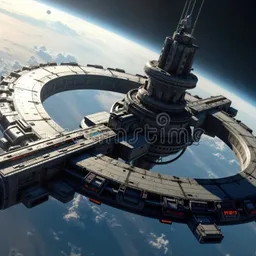
AI MOLECULAR SCIENCE & ENGI... (AIMOL)

0xc99e7adcdcb9cf3cd8a8e5e1e5187f8faebe54f6
Presale Live
Started at Apr 10, 2026
About AI MOLECULAR SCIENCE & ENGI...
de
All
Images
Places
News
Videos
Places sites
Forums
Short videos
Books
Web
Finance
The convergence of artificial intelligence (AI), molecular science, and quantum engineering is fundamentally redefining spacecraft design and deep-space mission capabilities. By moving from classical "trial and error" to data-driven and quantum-accurate simulations, researchers are solving engineering challenges that were previously considered intractable.
🚀 AI & Molecular Science in Spacecraft Design
Molecular science traditionally relies on solving the Schrödinger equation to predict material behavior, a process that is computationally exhaustive. AI acts as a "shortcut," maintaining high accuracy while drastically reducing processing time.
ResearchGate
ResearchGate
+1
Materials Discovery: AI models are being used to identify and synthesize new materials for the aerospace industry, such as lossless superconductors and robust materials that maintain their properties under extreme pressure and temperature.
Thermal Protection: Next-generation heat shields for NASA's Orion spacecraft use carbon-based materials designed through advanced molecular simulations to endure the high heat flux of lunar re-entry.
Self-Healing Materials: Companies like Boeing are exploring AI to discover lighter, more durable materials, including self-healing polymers that can automatically respond to environmental damage in space.
BosonQ Psi (BQP)
BosonQ Psi (BQP)
+3
⚛️ Quantum Engineering: The Next Frontier
Quantum engineering utilizes the principles of superposition and entanglement to create technologies that exceed the limits of classical physics.
BosonQ Psi (BQP)
BosonQ Psi (BQP)
1. Quantum Sensing & Navigation
Space offers a "quiet" environment far from Earth's noise, making it ideal for ultra-precise quantum sensors.
European Space Agency
European Space Agency
+1
GPS-Free Navigation: Revolutionary quantum devices can now navigate using the Earth's unique magnetic field "fingerprints" rather than satellites.
Gravity Gradiometry: NASA's Quantum Gravity Gradiometer Pathfinder uses atom interferometry to measure gravity with unprecedented precision, aiding in planetary exploration and Earth observation.
NASA (.gov)
NASA (.gov)
+2
2. Quantum Communication
Secure Data Exchange: Satellite-based Quantum Key Distribution (QKD) provides unbreakable encryption by using entangled photons. China’s Micius satellite has already demonstrated this over a 7,600 km distance.
Quantum Internet: Satellites are expected to serve as the global nodes for a future Quantum Internet, connecting quantum processors and sensors worldwide.
BosonQ Psi (BQP)
BosonQ Psi (BQP)
+2
🤖 AI-Driven Autonomous Missions
As missions head deeper into the solar system, communication delays make real-time human control impossible. AI and Quantum Machine Learning (QML) allow spacecraft to function as independent agents.
BosonQ Psi (BQP)
BosonQ Psi (BQP)
Onboard Decision-Making: QML systems can autonomously manage energy, adjust life support, and diagnose system failures.
Trajectory Optimization: AI and quantum annealing (using systems like D-Wave) can evaluate millions of potential flight paths simultaneously to find the most fuel-efficient routes.
Anomaly Detection: AI4Space missions combine thermal imaging with AI to monitor spacecraft health, detecting temperature anomalies far more accurately than traditional sensors.
BosonQ Psi (BQP)
BosonQ Psi (BQP)
+1
🛸 Revolutionary Propulsion Concepts
Quantum and AI-driven breakthroughs are aiming to move propulsion beyond traditional chemical rockets.
Nuclear Thermal Propulsion (NTP): AI is being used to optimize the geometry and heat flow in nuclear thermal engines, which could take humans to Mars faster and at a lower cost.
Quantum Propulsion (Theoretical): Some research explores "quantum cocoons" and Q-force generators that could theoretically allow for high maneuverability without the influence of inertia or G-forces, though these remain in highly experimental or conceptual stages.
European Open Science
European Open Science
+1
If you are interested in a specific area, I can help you:
Build a literature review on a specific quantum sensing technique (e.g., atom interferometry).
Outline the current hardware limitations (e.g., radiation effects on qubits) for onboard quantum computers.
Compare AI-driven materials discovery vs. traditional laboratory methods.
All
Images
Places
News
Videos
Places sites
Forums
Short videos
Books
Web
Finance
The convergence of artificial intelligence (AI), molecular science, and quantum engineering is fundamentally redefining spacecraft design and deep-space mission capabilities. By moving from classical "trial and error" to data-driven and quantum-accurate simulations, researchers are solving engineering challenges that were previously considered intractable.
🚀 AI & Molecular Science in Spacecraft Design
Molecular science traditionally relies on solving the Schrödinger equation to predict material behavior, a process that is computationally exhaustive. AI acts as a "shortcut," maintaining high accuracy while drastically reducing processing time.
ResearchGate
ResearchGate
+1
Materials Discovery: AI models are being used to identify and synthesize new materials for the aerospace industry, such as lossless superconductors and robust materials that maintain their properties under extreme pressure and temperature.
Thermal Protection: Next-generation heat shields for NASA's Orion spacecraft use carbon-based materials designed through advanced molecular simulations to endure the high heat flux of lunar re-entry.
Self-Healing Materials: Companies like Boeing are exploring AI to discover lighter, more durable materials, including self-healing polymers that can automatically respond to environmental damage in space.
BosonQ Psi (BQP)
BosonQ Psi (BQP)
+3
⚛️ Quantum Engineering: The Next Frontier
Quantum engineering utilizes the principles of superposition and entanglement to create technologies that exceed the limits of classical physics.
BosonQ Psi (BQP)
BosonQ Psi (BQP)
1. Quantum Sensing & Navigation
Space offers a "quiet" environment far from Earth's noise, making it ideal for ultra-precise quantum sensors.
European Space Agency
European Space Agency
+1
GPS-Free Navigation: Revolutionary quantum devices can now navigate using the Earth's unique magnetic field "fingerprints" rather than satellites.
Gravity Gradiometry: NASA's Quantum Gravity Gradiometer Pathfinder uses atom interferometry to measure gravity with unprecedented precision, aiding in planetary exploration and Earth observation.
NASA (.gov)
NASA (.gov)
+2
2. Quantum Communication
Secure Data Exchange: Satellite-based Quantum Key Distribution (QKD) provides unbreakable encryption by using entangled photons. China’s Micius satellite has already demonstrated this over a 7,600 km distance.
Quantum Internet: Satellites are expected to serve as the global nodes for a future Quantum Internet, connecting quantum processors and sensors worldwide.
BosonQ Psi (BQP)
BosonQ Psi (BQP)
+2
🤖 AI-Driven Autonomous Missions
As missions head deeper into the solar system, communication delays make real-time human control impossible. AI and Quantum Machine Learning (QML) allow spacecraft to function as independent agents.
BosonQ Psi (BQP)
BosonQ Psi (BQP)
Onboard Decision-Making: QML systems can autonomously manage energy, adjust life support, and diagnose system failures.
Trajectory Optimization: AI and quantum annealing (using systems like D-Wave) can evaluate millions of potential flight paths simultaneously to find the most fuel-efficient routes.
Anomaly Detection: AI4Space missions combine thermal imaging with AI to monitor spacecraft health, detecting temperature anomalies far more accurately than traditional sensors.
BosonQ Psi (BQP)
BosonQ Psi (BQP)
+1
🛸 Revolutionary Propulsion Concepts
Quantum and AI-driven breakthroughs are aiming to move propulsion beyond traditional chemical rockets.
Nuclear Thermal Propulsion (NTP): AI is being used to optimize the geometry and heat flow in nuclear thermal engines, which could take humans to Mars faster and at a lower cost.
Quantum Propulsion (Theoretical): Some research explores "quantum cocoons" and Q-force generators that could theoretically allow for high maneuverability without the influence of inertia or G-forces, though these remain in highly experimental or conceptual stages.
European Open Science
European Open Science
+1
If you are interested in a specific area, I can help you:
Build a literature review on a specific quantum sensing technique (e.g., atom interferometry).
Outline the current hardware limitations (e.g., radiation effects on qubits) for onboard quantum computers.
Compare AI-driven materials discovery vs. traditional laboratory methods.
In case of missing or misleading information pleaseID: 225606

0

0

0
 Check Contract
 AI MOLECULAR SCIENCE & ENGI... FAQ
Is AI MOLECULAR SCIENCE & ENGI... a scam?
What is AI MOLECULAR SCIENCE & ENGI... contract address?
Launched on Apr 10, 2026
In case of missing or misleading information please